
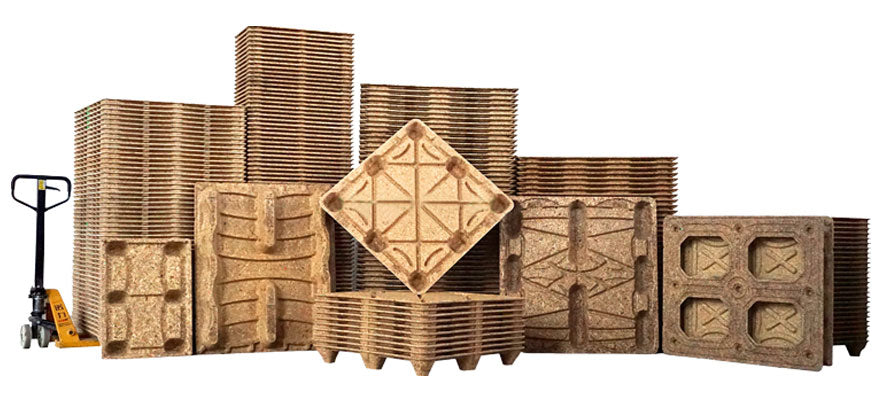
Differences between wooden flooring and molded flooring
Comparing molded pulp decking with wood decking reveals several differences in their features, advantages and disadvantages:
Molded pulp pallets:
Environmental impact: Molded pulp pallets are made from recycled paper fibers, making them environmentally friendly and sustainable. They contribute to waste reduction by using recycled materials and are biodegradable at the end of their life cycle.
Weight: Molded pulp pallets are generally lighter than wood pallets, which can result in transportation savings due to reduced fuel consumption and lower shipping costs.
Safety: Molded pulp pallets are free of splinters, nails and sharp edges, reducing the risk of injury to workers during handling and transportation. They are also safe for use in industries where cleanliness and hygiene are crucial.
Customization: Molded pulp pallets can be designed to meet specific size, weight and load capacity requirements, offering flexibility for a variety of applications. They can be tailored to fit specific product dimensions and shipping needs.
Moisture Resistance: Molded pulp pallets are moisture and mold resistant, reducing the risk of product contamination during transport and storage, especially in damp or wet conditions.
Space Saving: Molded pulp pallets are often designed to be nestable or stackable, allowing for efficient storage and space savings when not in use.

Compliance: Molded pulp pallets comply with ISPM 15 regulations for international maritime transport, as they are pest-free and do not require heat treatment or fumigation like wooden pallets.
Wooden pallets:
Strength and Durability: Wooden pallets are known for their strength and durability, able to withstand heavy loads and withstand rough handling.
Longevity: Properly maintained wood decks can have a longer lifespan compared to molded pulp decks. However, they are susceptible to damage from moisture, pests, and wear and tear over time.
Widely Available: Wood pallets are readily available and widely used across a variety of industries, making them a familiar choice for many businesses.
Repairable: Wood decking can be repaired relatively easily by replacing damaged components, extending its useful life and reducing replacement costs.
Fire Resistance: Wood decking may have better fire resistance compared to molded pulp decking, although this can vary depending on factors such as wood treatment and decking construction.
Higher initial cost: Wood pallets may have a higher initial cost compared to molded pulp pallets, especially if they are made from treated or high-grade wood.
Ultimately, the choice between molded pulp pallets and wood pallets depends on factors such as the specific application, transportation requirements, sustainability goals, budget constraints, and preference for certain characteristics such as strength, durability, and environmental impact.