
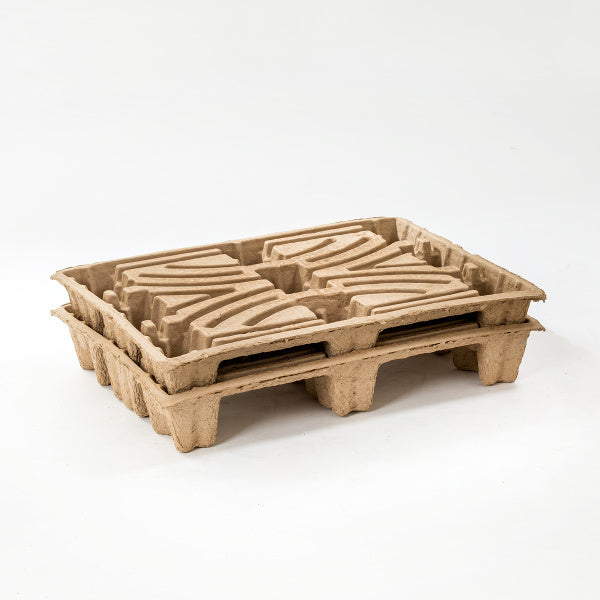
Molded pallets vs. wooden or plastic pallets
Molded pulp pallets offer several advantages over traditional wood or plastic pallets:
Molded pulp pallets, also known as pressed paper pallets or fiberboard pallets, offer several advantages over other materials used to make pallets. Some of these advantages include:
Sustainability: Paper pulp molded pallets are made primarily from recycled materials, such as recovered paper and cardboard. This makes them an environmentally friendly option, as they help reduce the amount of waste sent to landfills and promote the reuse of resources.
Lightness: Pulp pallets are lighter than wooden or metal pallets, making them easier to handle and transport. This can reduce shipping costs and improve logistical efficiency, especially in industries where large volumes of products are handled.
Customization: Molded pulp pallets can be manufactured in a variety of sizes and shapes to suit specific customer needs. Additionally, features such as gussets or grooves can be incorporated for easy handling and storage.
Strength: Despite being lightweight, pulp pallets are surprisingly strong and durable. They can withstand heavy loads and resist impacts and abrasions, making them suitable for a wide range of industrial and commercial applications.
Hygiene: Pulp pallets are inherently more hygienic than wooden pallets as they do not harbour harmful organisms such as insects, fungi or bacteria. This makes them ideal for use in food or pharmaceutical industries, where high hygiene standards are required.
Safety: Molded pulp pallets typically have rounded edges and smooth surfaces, reducing the risk of injury during handling. They also contain no nails, splinters or other sharp items that could pose a hazard to workers or stored products.
Space Saving: Molded pulp pallets are often designed to be nestable or stackable, allowing for efficient storage and space savings when not in use. This feature can help optimize warehouse space and reduce storage costs.
Regulatory Compliance: Molded pulp pallets comply with ISPM 15 for international maritime transport as they are pest-free and do not require heat treatment or fumigation like wooden pallets.
Reduced risk of contamination: Molded pulp pallets are resistant to moisture and mold, reducing the risk of product contamination during transport and storage, especially in damp or wet conditions.
Recyclability: Once they have reached the end of their useful life, pulp pallets can be recycled again to produce new paper or cardboard products. This closes the life cycle of the material and contributes to the circular economy.
In summary, molded pulp pallets offer a unique combination of sustainability, lightness, strength, hygiene and safety, making them an attractive option for a variety of industrial and commercial applications.